


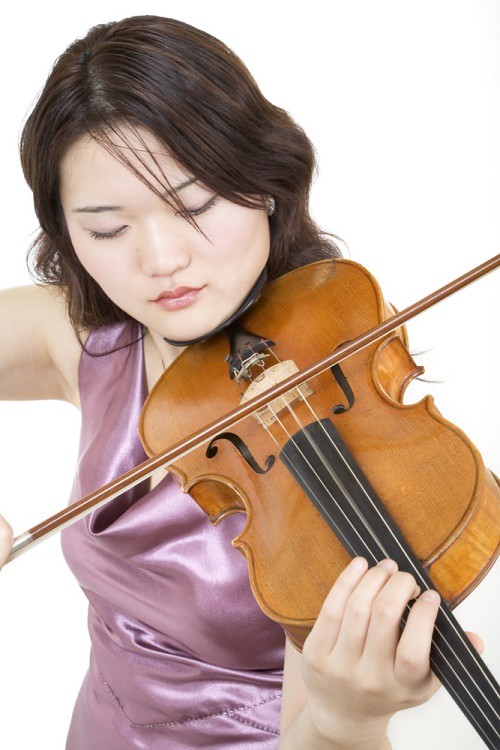
 We professional musicians love to share music with others.
Whether we perform in concert halls, nightclubs, informal gatherings, or recording studios, our hard work is most rewarded when we connect with listeners.
The majority of students, though, spend little time in performance situations. By and large, they make music in practice rooms and rehearsal halls.
So, are music students typically acquiring the skills of expert performers?
An Underappreciation of Performance Skills
It appears to me, having taught and performed for more than 30 years, that vast numbers of aspiring musicians aren’t learning essential skills, and, as a consequence, they’re being crippled by performance anxiety.
In fact, researchers estimate that about 25% of advanced musicians wrestle with severe anxiousness on stage. A larger percentage deal with less debilitating but nonetheless unpleasant symptoms.
As I see it, many students buckle in concerts and auditions due to an under-appreciation among music educators as to what performance skills are and how they’re learned.
That is, the skills involved in memorizing music, starting and ending pieces on stage, coping with stress, directing the musical flow under pressure, and so on often receive minimal attention.
“As I see it, many students buckle in concerts and auditions due to an under-appreciation among music educators as to what performance skills are and how they’re learned.”
Lack of Skills = Lack of Confidence
Consider, for example, the plight of the average young piano student. She might take lessons from a local teacher and practice at home. Then, once or twice a year, her teacher might sponsor a student recital; otherwise, the student won’t perform much, if at all.
But such limited exposure to performance situations won’t enable a student to gain facility as a performing artist.
On the contrary, she’s more likely to be saddled with stage fright because performing will feel alien – she’ll probably have little grasp of how to be in command on stage.
Conversely, well-taught students perform regularly under their teachers’ direction and can do so confidently even during the early stages of their training, much like young athletes. For them, performing is fun because their teachers prioritize the acquisition of performance skills.
Undereducated students, though, seldom realize that their jitters result from a lack of know-how. They mistakenly conclude that there must be something wrong with them: “I don’t have a knack for performing,” they’ll say.
“Limited exposure to performance situations won’t enable a student to gain facility as a performing artist.”
On-Stage Confidence for All
I’m convinced that all of us, with few exceptions, have the potential to perform music confidently and artistically, but we must acquire specific skills to do so.
Therefore, I’ve created an educational system, articulated in The Musician’s Way, in which performance skills are integrated into music lessons and practice sessions and in which performing becomes commonplace.
Students who follow such an approach learn to unite practice with performance. They become capable of solving problems, managing nervousness, and expressing themselves authentically.
Here are some highlights of the performance skills described in the text.
“All of us, with few exceptions, have the potential to perform music confidently and artistically, but we must acquire specific skills to do so.”
Pre- At- and Post-Performance Skills
Performance skills come into play before, during, and after a show, a recording session, or an audition. They encompass the ways in which we learn music in the practice room, center ourselves, present ourselves on stage, deal with stress, handle errors, and so forth.
The Musician’s Way breaks down pre-, at- and post-performance skills while preserving their interconnections.
- Part I of the book emphasizes deep learning and spells out failsafe ways to absorb and memorize music.
- Part II provides guidelines that help us plan concerts and recording sessions, prepare for auditions, develop stage presence, harness on-stage energy, assess performances, and more.
- Part III covers self-care and creativity enhancement.
The text also reveals that nervousness has three main sources: the person, the task at hand, and the performance situation. Therefore, performance skills can also be thought of as being personal, task-oriented, and situational.
For example, if we’re going to take charge on stage, we have to be adept at making music in high-stakes situations, we must be personally committed to sharing our music, and we need to choose repertoire – i.e., a task – that’s within our capabilities.
But if students are unfamiliar with on-stage and backstage environments, are ambivalent about performing, or select overly challenging music, they’re preset for anxiousness.
Of course, to become fluent with performance skills we must practice them, so see my post “Practicing Performance” as well as Part II of The Musician’s Way for crucial guidelines to gain expertise and confidence as a performing artist.
Related posts
3 Elements of Showmanship
The 3 Roots of Performance Anxiety
Assessing Your Performance Skills
Becoming a Confident Performer
Excelling Under Pressure
© 2009 Gerald Klickstein
Photo licensed from Shutterstock
What I don’t understand is why I still get nervous in a concert setting after 24 years of playing and performing? I rarely get nervous on gigs anymore but if I’m a soloist on stage, I start losing control of my body (bow arm starts shaking, which leads to sketchy intonation and random mistakes).
Hi Lorraine – As I’m sure you know, the causes of performance nerves can be quite complex, so there’s no easy answer to your question. But answers do exist. I invite you to explore the chapters in The Musician’s Way that address performance issues and the articles here in the performance anxiety category – http://musiciansway.com/blog/category/performance-anxiety/. In tandem, given the long duration of your battle with jitters, you’d probably also benefit from consulting a performance coach. Whatever you decide to do, I hope that you’ll stay the course and keep sharing music! Thanks for reading.
very good explanation for my work it helped me allot to become a better person in presitation
You’re welcome, Terry. Thank you for the touching words and for sharing your experience with The Musician’s Way Blog community. It’s most gratifying to hear that my work has been helpful to you, and I celebrate your success. Congratulations!
HI Gerald:
I just want to send a big thank you your way regarding all you teach about performance. I am a fairly accomplished church organist who is used to playing for worship services from behind a curtain and yesterday I gave my first recital on center stage. I knew it would feel very different than I was accustomed to and I have been diligently reading your chapters on performance and following your suggestions very carefully including following a timeline for preparing, practicing with performance in mind (not mindful repitition),learning good pre and post performance habits etc. I am happy to report a MOST successful recital that exceeded my expectations! One of the most helpful pieces of advice was to choose accessible repertoire. I can play more advanced pieces than I chose for my recital, but I wanted to work on my delivery and stage presence and feel confident learning the mechanics of a different organ. Choosing accessible repertoire, that was also engaging for the audience, was the ticket to a most successful recital! Now I am working on assessing my performance to build on this experience for next time. Thank you for all of the wonderul support I received through your book!
Gratefully, Terry
Thanks, Rachel – I appreciate your positive words.
This is exactly one of the comments that my mentor said to me the other day. I think that this is a great post for types of musical teachers; as well as for all students to read.