* You are viewing Posts Tagged ‘wellness’

The Sustainability Triangle

“Music expresses that which cannot be put into words
and that which cannot remain silent.”
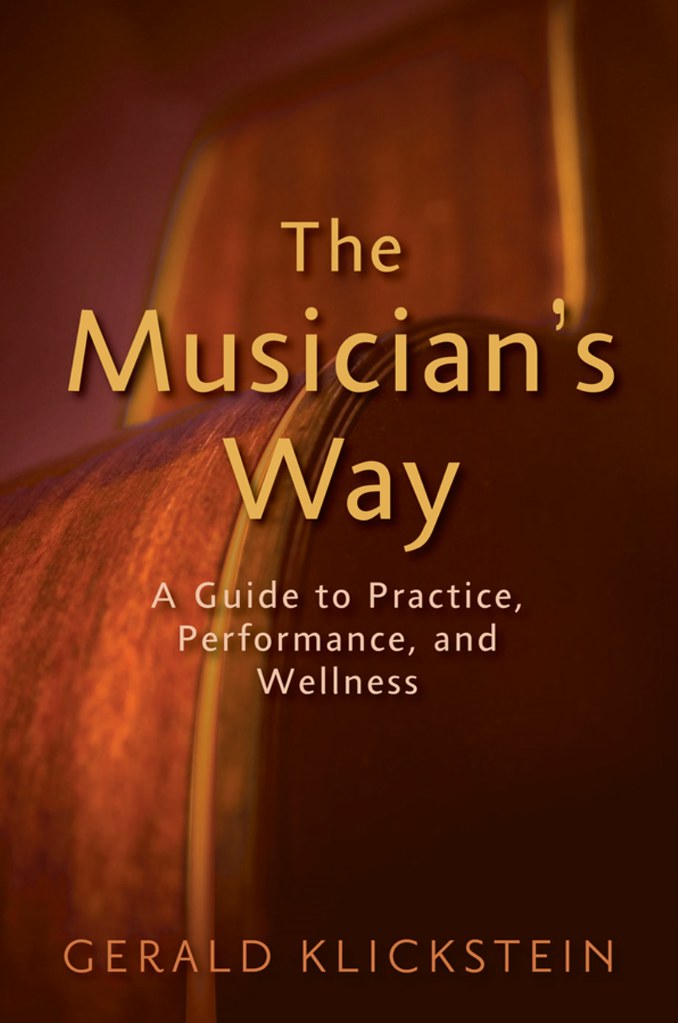
-Victor Hugo, The Musician’s Way, p. 5

All of us musicians feel something within us that cannot remain silent.

But to forge lasting, full-time music careers, we have to make wise choices about the kinds of work we do and the ways we live our lives. Continue Reading

Inner Smile

“It’s your internal motivation that opens the creative spigot.”
-The Musician’s Way, p. 105

Those of us who create day after day know that things don’t always go smoothly. Sometimes our work flows; other times difficulties slow us down.

But whether we’re dealing with good days or not, one simple practice helps keep our creativity rolling. Continue Reading

5 Causes of Musicians’ Injuries

“I continued to play with a sore arm with the rationalization that I could play through the pain and that the discomfort would just miraculously go away as I got into better shape as a cellist. But the pain didn’t go away. It got worse.”
–Janet Horvath, cellist (The Musician’s Way, p. 231)

High-level music making brings immeasurable rewards and also comes with risks of injury.

But if we understand the risks, we can minimize them and position ourselves to keep performing for life.

This post spotlights the 5 main causes of musicians’ injuries (aside from those that affect hearing) along with ways in which we can sidestep common mishaps. Continue Reading

Ten Tips for Ongoing Creativity

“Combine your mistakes and your triumphs, stir them into the pot of artistic progress, and then savor what bubbles up.”
The Musician’s Way, p. 112

Let’s say that you’ve pinpointed some creative goals, equipped your workspace, and scheduled daily times to create - your objectives are within reach and you’re fired up to achieve them.

Is that sufficient groundwork to establish an ongoing creative practice? Continue Reading

Can Focal Dystonia Be Prevented?

“Begin slowly and increase gradually any unaccustomed use of the hands.”
–Michael Charness, MD (The Musician’s Way, p. 237)

Guitarists Billy McLaughlin and Liona Boyd, pianists Leon Fleischer and Gary Graffman – all are musicians whose careers were upended by the mysterious condition known as focal dystonia.

Focal dystonia is a movement disorder characterized by painless, involuntary muscle contractions that occur when a person does a particular activity.

The images shown here portray a guitarist’s hand and a trombonist’s embouchure during dystonic contractions. Continue Reading

Taking Breaks

Image of violin in case“Breaks are as vital to musicians as they are to athletes.”
The Musician’s Way, p. 75

If you’re like me, you typically become absorbed during practice sessions, so much so that it often doesn’t seem that breaks would be necessary.

But even when we feel mentally focused and physically strong, after working for a while, our muscles, tendons, vocal folds, lips, and the like still need time to recharge. Continue Reading

Mental Space

“Logic will get you from A to B. Imagination will take you everywhere.”
–Albert Einstein

Is there anything that we creative types prize more than imagination? I expect not. And one way that we can support our imaginativeness is to preserve the mental space necessary for our ideas to germinate and grow.

Problem is, in our hyperconnected world, information bombards us, and processing all of that information consumes our mental resources.

Here are five habits I adopt to protect and replenish the mental space I need to do my creative work. Continue Reading

Mindful Musicianship

“Learning the basics in a rote, unthinking manner
almost ensures mediocrity.”
–Ellen Langer, psychologist (The Power of Mindful Learning, p. 14)

How does mindfulness apply to music making? When we’re mindful, we notice. We attend to our sound, emotions, execution, and coperformers.

We perceive accurately, without judging ourselves. We bring fascination to every note we play or sing. Continue Reading

Sitting Tall

“The simplest things are the ones that count.”
–Pablo Casals, cellist

Have you ever dealt with discomfort caused by sitting?

Most of us sit for hours each day as we practice, study, and use computers.

Yet I’ve observed that few musicians, writers, and computer users know how to sit optimally and, as a result, many endure frequent episodes of back pain.

Here are 4 principles that contribute to easeful sitting. All are expanded on in The Musician’s Way (p. 250-269), where you’ll find dozens of high-resolution photos.

Continue Reading

The Unconflicted Artist

“Ultimately, your musical progress will depend more on your skillfulness with the creative process than on any talent.”
The Musician’s Way, p. 313

We dedicated musicians invest heavily in growing our abilities because we know that the personal payoff is immense: Few things in life rival the joy of making music.

Why then do countless young artists who have talent and opportunities to excel nonetheless practice halfheartedly, miss application deadlines, avoid publishing websites, and otherwise dither? Continue Reading