* You are viewing Posts Tagged ‘injury prevention musicians’

Can Focal Dystonia Be Prevented?

“Begin slowly and increase gradually any unaccustomed use of the hands.”
–Michael Charness, MD (The Musician’s Way, p. 237)

Guitarists Billy McLaughlin and Liona Boyd, pianists Leon Fleischer and Gary Graffman – all are musicians whose careers were upended by the mysterious condition known as focal dystonia.

Focal dystonia is a movement disorder characterized by painless, involuntary muscle contractions that occur when a person does a particular activity.

The images shown here portray a guitarist’s hand and a trombonist’s embouchure during dystonic contractions. Continue Reading

Taking Breaks

Image of violin in case“Breaks are as vital to musicians as they are to athletes.”
The Musician’s Way, p. 75

If you’re like me, you typically become absorbed during practice sessions, so much so that it often doesn’t seem that breaks would be necessary.

But even when we feel mentally focused and physically strong, after working for a while, our muscles, tendons, vocal folds, lips, and the like still need time to recharge. Continue Reading

Sitting Tall

“The simplest things are the ones that count.”
Pablo Casals, cellist

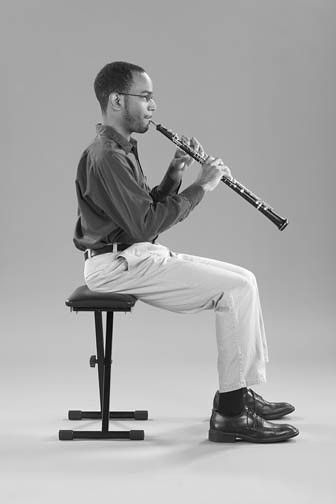
Have you ever dealt with discomfort caused by sitting?

Most of us sit for hours each day as we practice, study, and use computers.

Yet I’ve observed that few music students know how to sit optimally and, as a result, many endure frequent episodes of back pain.

Here are 4 principles that contribute to easeful sitting. All are expanded on in The Musician’s Way (p. 250-269), which includes dozens of high-resolution photos.

Continue Reading

Resources for Instrumentalists & Singers

Miles Davis

“Don’t play what’s there, play what’s not there.”
–Miles Davis, trumpeter and composer

Miles Davis poetically captures the essence of artistic musicianship.

That is, we don’t pursue musical excellence to retrace other performers’ steps. Rather, we strive to express our unique musical voices and create something new.

How do we attain such comprehensive fluency? Continue Reading

Optimizing Practice Time

“Of all my skills, none is more important
than the ability to organize my time.”
–Twyla Tharp, choreographer (The Creative Habit, p. 178)

Whether you’re a mature musician or a rising one, your creative output will hinge on your knack for carving out practice time and using it productively.

Here are 7 strategies that will help you make the most of your practice. Continue Reading

Heeding the Signs of Injury

“I ignored all my body’s warning signals in the name of ‘dedication’ to what I was doing. I had absolutely no idea that this little problem
would in fact threaten my career.”
–Christine Harrison, violinist (The Musician’s Way, p. 238)

We may not like to admit it, but we all have physical limits. And given that music making is so physical, we musicians sometimes exceed our limits, much as dancers and athletes do.

Still, we can prevent minor hurts from escalating into dire injuries, if we’re able to recognize and respond to the body’s warning signs. Continue Reading

The Total Warm-Up

“Like sensuous opening ceremonies,
warm-ups prepare the body, mind, and spirit for making music.”
- The Musician’s Way, p. 37

I always take pleasure in my daily warm-ups. As I open my guitar case, tune, and play my first notes, I feel inspired and grateful to be able to make music.

Students, however, often lack clarity about how they might warm up.

So I’ve developed an adaptable 6-part framework that both instrumentalists and singers can employ to fashion warm-up routines that fit them. Continue Reading

Balanced Shoulders, Open Heart

Violist Sheila Browne demonstrates balanced use of the shoulders. (c) Gerald Klickstein“The better you use yourself, the better you will play.”
–Pedro de Alcantara, Alexander technique teacher (The Musician’s Way, p. 257)

Music making may be the most integrated of all human activities. It’s no exaggeration to say that singing or playing requires us to coordinate everything that we are – our bodies, minds, and spirits.

Often, though, the rigors of practice and performance cause us to use ourselves in ways that are less than optimal. Continue Reading

The Competition Question

If you’re a rising musician, you’ll probably have opportunities to perform in competitions.

This post will help you decide whether a particular contest is right for you. Continue Reading

The Benefits of Accessible Music

Time and again, when I hear students audition, some will attempt to perform music that’s beyond their capacities.

“This’ll be impressive,” they surmise, as they struggle through one phrase after another.

Such students seldom realize that their misguided choices of repertoire don’t just fail to impress but also hamper their progress:  Continue Reading