* You are viewing Posts Tagged ‘choosing repertoire’

Reviving Old Repertoire

“Whenever you practice or perform a composition, celebrate its unique message.
Feel the excitement of listening to the music for the first time.”
The Musician’s Way, p. 74

All of us musicians learn and then set aside countless pieces over the years.

Sometimes, we excitedly return to old favorites but then feel glum when we realize that music we once performed with ease is now surprisingly difficult. Continue Reading

7 Tips for Designing Concert Programs

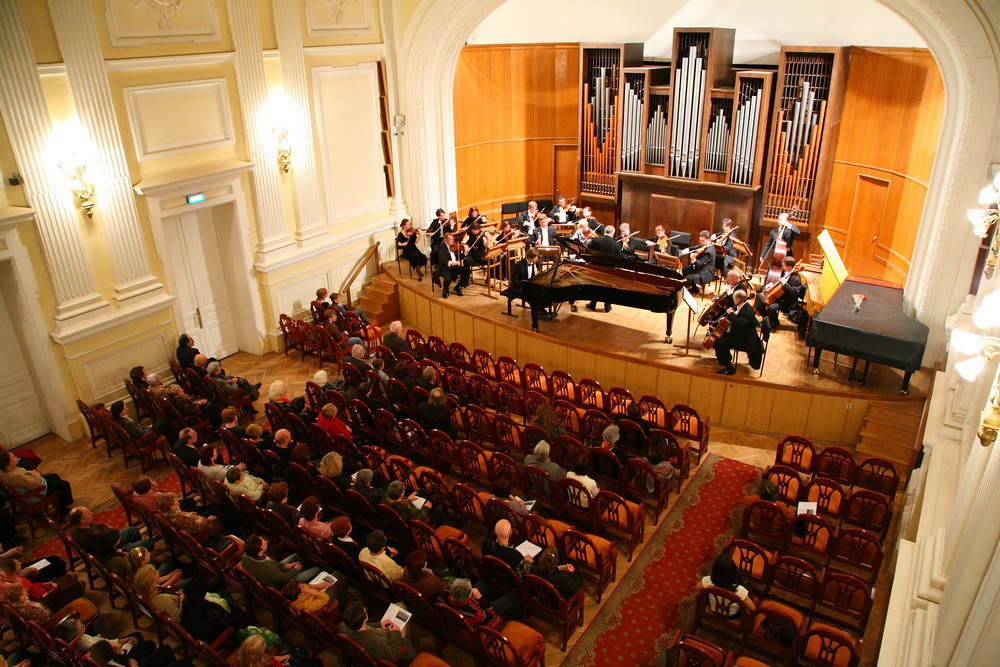
Image of interior of concert hall“Programs are a bit like prix-fixe menus in a restaurant: We can’t serve music à la carte . . . so our menu has to be quite diverse and – tasty.”
-Eckart Preu, conductor (The Musician’s Way, p. 212)

Musicians who can transfix audiences succeed because of more than their artistry and charisma.

Spellbinding concerts result from the combined effect of the performers, venue, and the focus of this post – programming. Continue Reading

The 5 Facets of Performance Preparation

“Artistic performers are prepared performers.”
-The Musician’s Way, p. 155

Imagine that you’re backstage, minutes before the start of a concert: Are you feeling confident, or are you worried that things could go awry?

Unlike less-experienced musicians, who are often jittery at shows, we veterans approach the stage with enthusiasm because we have a trick up our sleeves. Continue Reading

Let’s Get Relevant

Photo of Anti-Mass by Cornelia Parker“A concert hall is like a shrine that people turn to for something that they can’t get anywhere else.”
The Musician’s Way, p. 154

If we’re to fill seats in concert halls, we have to present programs that resonate with audiences.

And one way to design compelling programs is to tap into topics that have broad relevance. Continue Reading

Effortless Sight-Reading

“Expertise with sight-reading belongs at the top of your list of priorities.”
The Musician’s Way, p. 99

Musicians who sight-read fluently enjoy huge artistic and professional advantages. Continue Reading

Overcome Nerves with Mastery Goals

“Research has shown that people who adopt mastery goals
experience the lowest levels of performance anxiety.”
Music Educators Journal, Dec. 2010.*

When we step on stage, nothing affects our state of mind more than our goals.

Mastery goals inspire us to be artistic and fearless.

Avoidance and comparison goals, in contrast, sap our creativity and confidence. Continue Reading

Programs that Pop

“Your imagination with programming can make the difference between your becoming either a busy performer with an eager audience
or one who performs little.”
The Musician’s Way, p. 216

Why do people attend concerts by rising musicians? Primarily because they feel attracted to the programs they’ll hear and the musicians who’ll perform.

How can emerging musicians create concert programs that get noticed? For starters, by becoming students of programming. Continue Reading

Maintaining Repertoire

“Ideas are like rabbits. You get a couple and learn how to handle them,
and pretty soon you have a dozen.”
–John Steinbeck, author

If you’re a musician who brims with ideas, you’ve probably learned piles of repertoire that you’d like to maintain.

Still, it’s no easy task to plan a practice schedule that incorporates dozens of compositions.

Here are strategies for keeping lots of titles performance-ready. Continue Reading

Stoking Motivation

“People who are unable to motivate themselves must be content with mediocrity, no matter how impressive their other talents.”
–Andrew Carnegie (The Musician’s Way, p. 105)

Persistent practice coupled with ongoing professional development is the recipe for musical success.

But persisting in the music business takes effort. Continue Reading

The Benefits of Accessible Music

Time and again, when I hear students audition, some will attempt to perform music that’s beyond their capacities.

“This’ll be impressive,” they surmise, as they struggle through one phrase after another.

Such students seldom realize that their misguided choices of repertoire don’t just fail to impress but also hamper their progress:  Continue Reading