


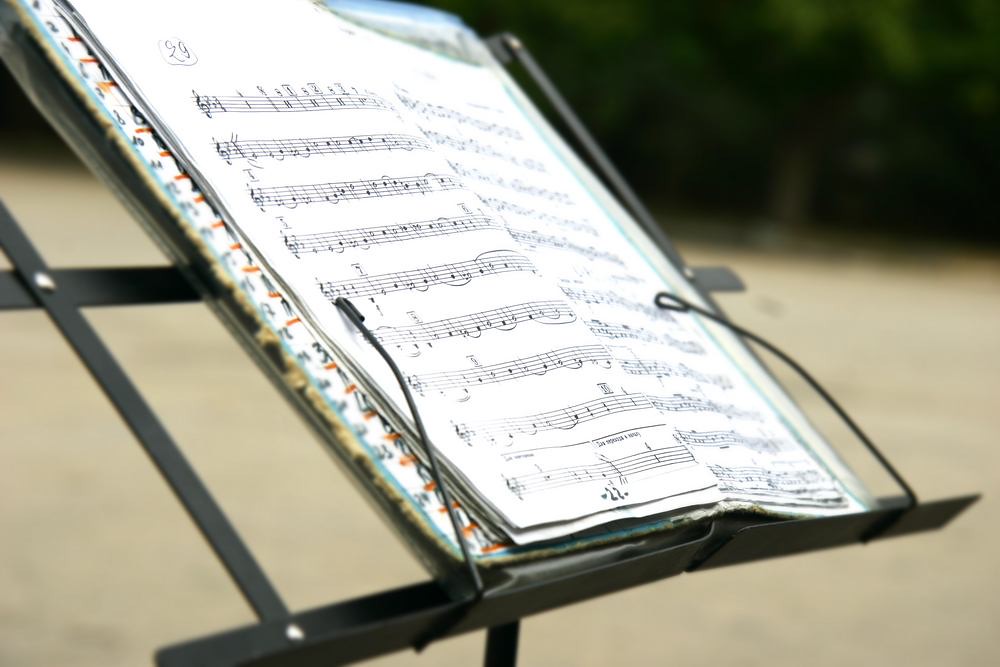
 “Expertise with sight-reading belongs at the top of your list of priorities.”
–The Musician’s Way, p. 99
Musicians who sight-read fluently enjoy numerous artistic and professional advantages.
Professionally, because they can perform with minimal rehearsal, they’re the first to be contacted when opportunities arise.
On the artistic side, they’re more versatile than weak readers due to the fact that they can readily assimilate diverse styles of music.
In spite of those benefits, I’ve observed that countless music students neglect to practice sight-reading.
Why the neglect? In my experience, many students don’t know how to develop their reading skills, become discouraged by their lack of improvement, and then quit working on their reading.
I’m convinced that fluency with sight-reading can be attained by any musician with adequate visual acuity, but it takes smart, persistent work to build up reading skills.
To help aspiring performers become fluent readers, below I sum up crucial things to emphasize in sight-reading practice.
To be clear, the term “sight-reading” refers to the accurate, expressive performance of an unfamiliar music score with no more than a minute or two to scan.
Sight-reading refers to the accurate, expressive performance of an unfamiliar music score with no more than a minute or two to scan.
How to Practice Sight-Reading
1. Start with Elementary Material
Only accessible music enables us to acquire habits of fluency. All too often, though, students unwisely choose to sight-read complex material.
If your reading skills need upgrading, opt for elementary music, and then step up the difficulty over an extended period.
Ideally, consult a teacher who can evaluate your skills and recommend suitable material. Also strive to assemble vast amounts of sight-readable music so that you never lack for scores.
2. Practice Sight-Reading Daily
Sight-reading skills require ongoing reinforcement if they’re to become second nature.
I advise ambitious students to practice reading a minimum of 15 minutes daily (during my youth, I practiced reading 30 minutes a day for years). Even when your practice time is limited, try to carve out 5 minutes.
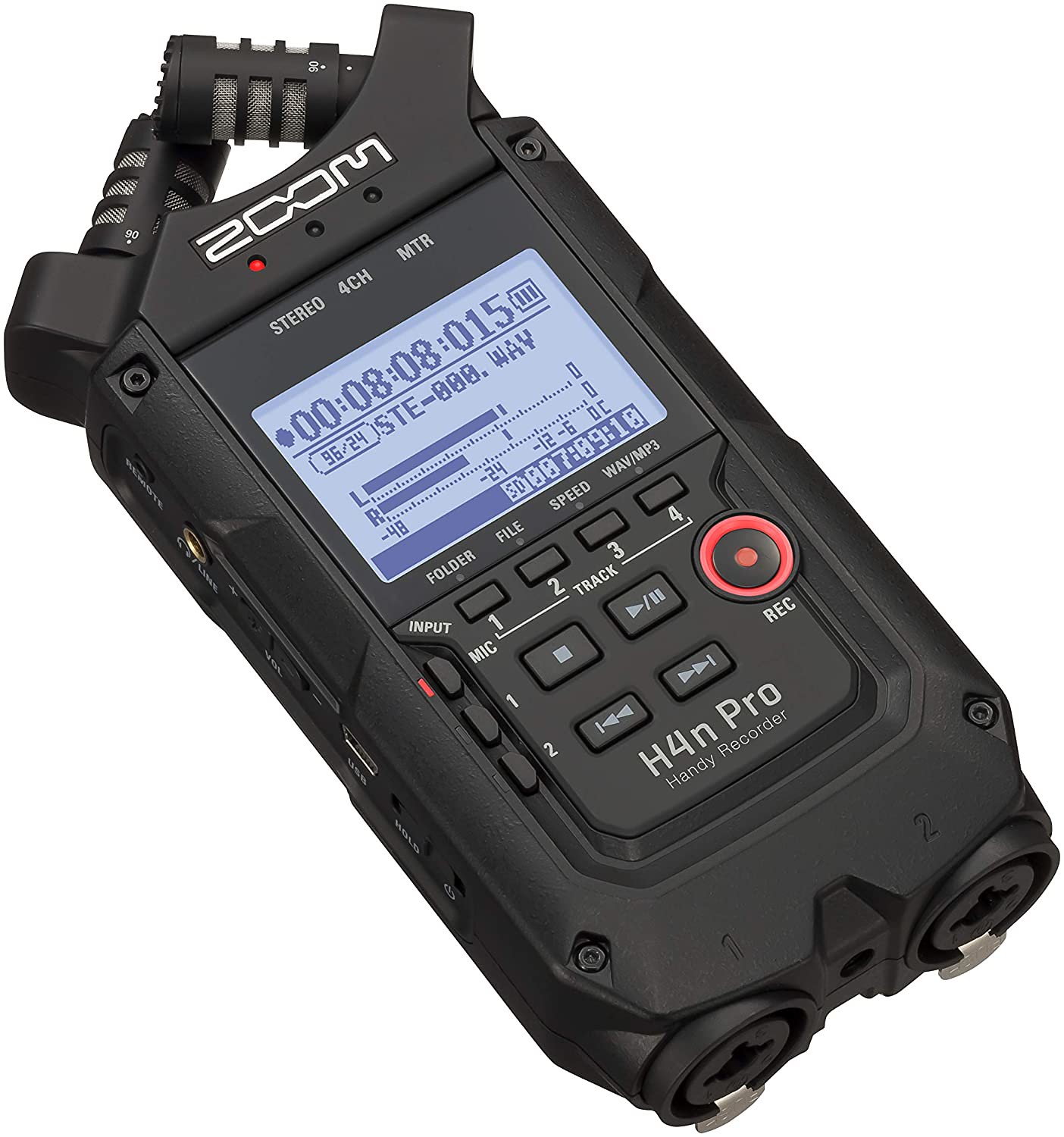
Zoom H4n Recorder
In addition to reading on your own, try to gather weekly with one or more colleagues to read ensemble music – doing so will bolster your skills, motivation and knowledge of repertoire.
You might also record and then review portions of your sight-reading practice.
3. Instill Fundamental Habits
Employ the following habits whenever you sight-read. These are crucial habits that enable expert music readers to excel.
- Scan first. I advise using a consistent scanning procedure, which I detail on page 101 of The Musician’s Way. In brief, when scanning, promptly identify a composition’s structural and expressive elements – especially rhythmic, melodic, and harmonic ones – and make note of any repeat or navigation signs.
- Count mentally. When sight-reading, our primary task is to maintain the rhythmic flow. Therefore, we should use a metronome in practice, internalize the pulse, and mentally count in line with the musical context.
- Look ahead. Be sure that you digest at least one note group ahead of the one that you’re playing or singing. Also, adjust the span of your eye fixations according to the musical context – the simpler the music or faster the tempo, the larger the span of notes we see at once. More info about eye movements during sight-reading can be found in this well-referenced article on Wikipedia.
- Keep going. When you flub, rather than interrupting the motion, keep the pulse intact and your eyes ahead. If a florid passage exceeds your ability, either omit it or just execute the notes on the main beats.
- Express the music. Expert sight-readers are artistic readers. So let’s faithfully express the character of everything we read, giving expression markings equal importance as pitches and rhythms.
- Minimize effort. Insist on ease whenever you read. Even when the going gets tough, release tension and be positive. When we steadfastly emphasize ease in our practice, easefulness becomes our default habit in practice and on stage.

See Part I of The Musician’s Way for many more strategies to improve sight-reading and music practice skills.
Related posts
The benefits of accessible music
Habits of excellence
Mental imaging
The power of specific goals
Rhythmic precision
© 2011 Gerald Klickstein
Photo licensed from Shutterstock
Great post. Very helpful for me. Thank you so much!
You’re welcome, Tuyen. Thanks for reading! Also see Chapter 5 of The Musician’s Way for more detailed sight-reading tips along with a powerful music example that illustrates how we might move our eyes and create mental chunks when we sight-read.
Great article! It can never be emphasized enough how important it is to start practicing sightreading with very simple pieces. There is the psychological block that you can avoid by starting ridiculously easy, and then gradually build up your skills. I find Bartok’s Microcosmos very useful for sight reading practice.
Practical, concise, credible advice from one of my favorite teachers. Thanks! I’m ordering your book.
Much appreciated, John! Hope you’ll visit often.
When I was a young piano student, I had access to a pile of music belonging to my parents, aunts, grandparents and even great aunts, as well as all the music books I had ever owned. So of course I would explore everything from John Thompson book 1 to Beethoven sonatas, with varying results.
As a teacher, it was a while before I realized that many pupils only possessed the book they were studying; previous books were routinely disposed of to charity shops or friends. This meant that my pupils only ever had music-for-study, and no access to music-for-fun.
I now get them parallel material, at a slightly easier level than they are studying at, and encourage them to look at this music on their own for fun as opposed to study. I’ll occasionally see how they are getting on, or offer advice.
This has, for most pupils, helped them to develop sightreading and independent learning skills from early on in their lessons.
Thanks for the comment, Kirsten. Great example!
We can also provide our students with links to suitable sight-reading material that they can download free from the IMSLP and then devote some lesson time to sight-reading duos with them.
It’s great this topic came up right now, because yesterday while sight reading as a recorder quintet, I was fumbling pretty badly. One reason is that in my practice, I have focused almost entirely on solo technique for alto recorder, and generally work on Baroque stuff. But when playing Renaissance choral arrangements for recorder ensemble, and trying to play tenor (which I did yesterday and hardly ever do), that’s an utterly different game. I’m going to do specific work on improving my ensemble playing (especially of the lower parts) and of sight reading in general.
Glad to know that you found my post helpful, Franklin, and thanks for sharing your story.
Thanks for the post again. I will keep it up daily. I have just subscribed to the facebook log of this homepage and I really like your articles. Have a great day, Gerald. *appreciation*
Hi Wing – Thanks for writing. It’s good to know that my post is helping to motivate your practice.
Regarding the study mentioned in that article in which the researchers conclude that working memory capacity rather than practice most affects sight-reading ability, I don’t find their study convincing, and neither do many others.
In my 30 years of teaching students to sight-read, I’ve observed that anyone can improve their reading ability with steady practice.
Will we all achieve the same skill level? Of course not. But we all can gather the know-how we need to express ourselves through music, make art, and live more creative, meaningful lives.
Hi Gerald, Greetings from Hong Kong.
Great post. I am motivated by your page again, to keep my practice (10 mins/ day). Thanks.
Great post, you inspire many through your words.
You’re welcome, Dakota. I’m gratified to know that you find my posts helpful.
What a great post. I can read music but ‘sight-reading’ is something that I will be working on in the very near future. Starting with less complicated music to build confidence is such a practical tip. Most of us want to skip steps and jump right too the end. Myself included.
I will add daily sight reading practice time to my regular piano practice time. I’m sure I’ll have improved in no time.
Thanks again for these simple and practical tips.